Popillia or the Japanese beetle is an extremely polyphagous scarab beetle that causes considerable damage to crops and turf if not promptly prevented and treated.
Popillia japonica Newman (or Japanese beetle) is an extremely polyphagous scarab beetle that causes substantial economic losses and requires high containment costs. Although its current spread is rather limited, P. japonica represents a serious threat to Europe.
Origin and Spread
Popillia japonica is native to Japan and Eastern Russia. In the early 20th century, it was accidentally introduced to North America (United States and Canada) and in the 1970s to Terceira Island in the Azores archipelago (Portugal). In the summer of 2014, P. japonica was reported for the first time in Continental Europe, specifically in Italy, between Piedmont and Lombardy, within a vast area of the Ticino Park. Since 2017, the insect has also been present in Switzerland.
Characteristics and Identification
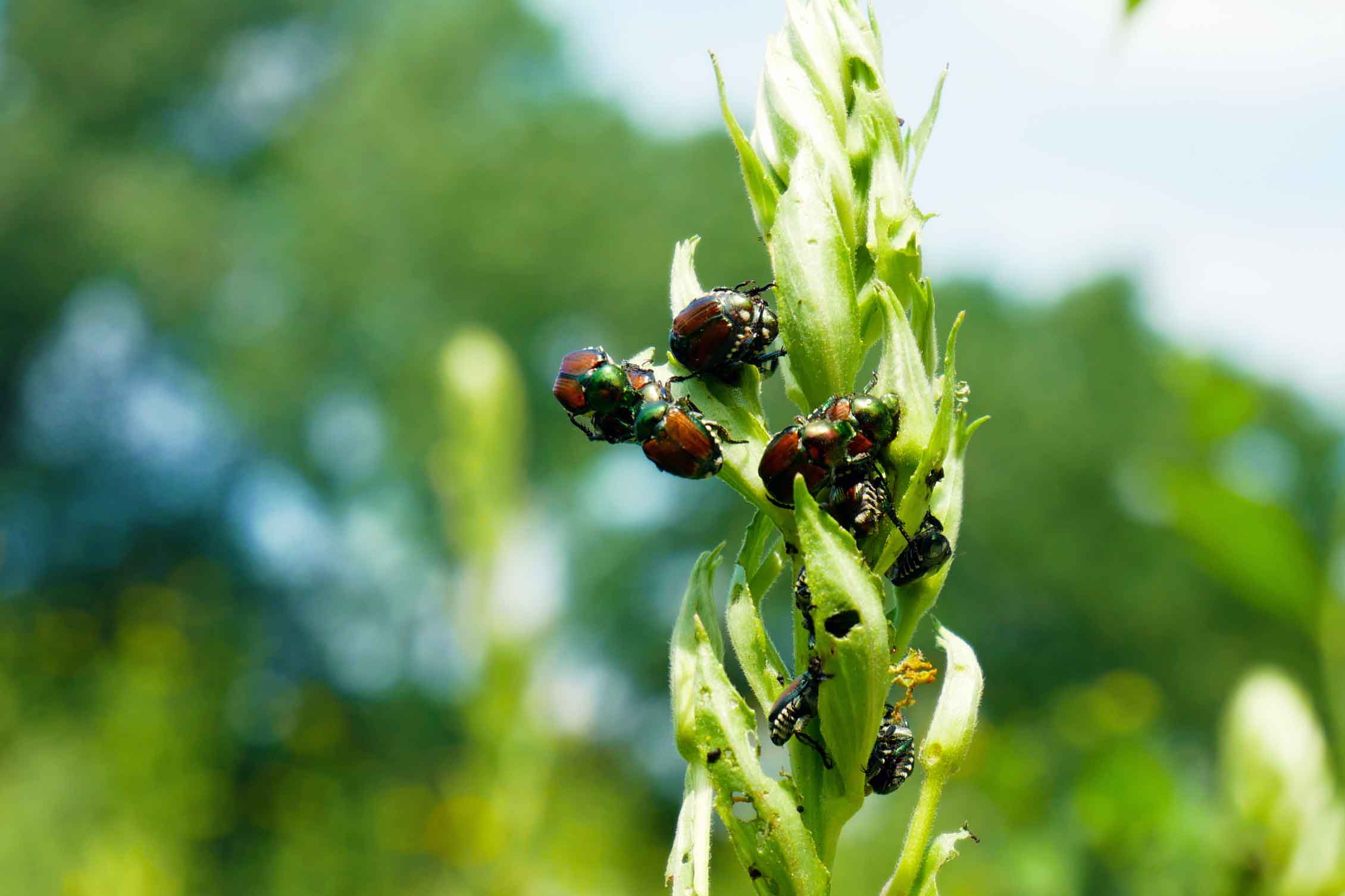
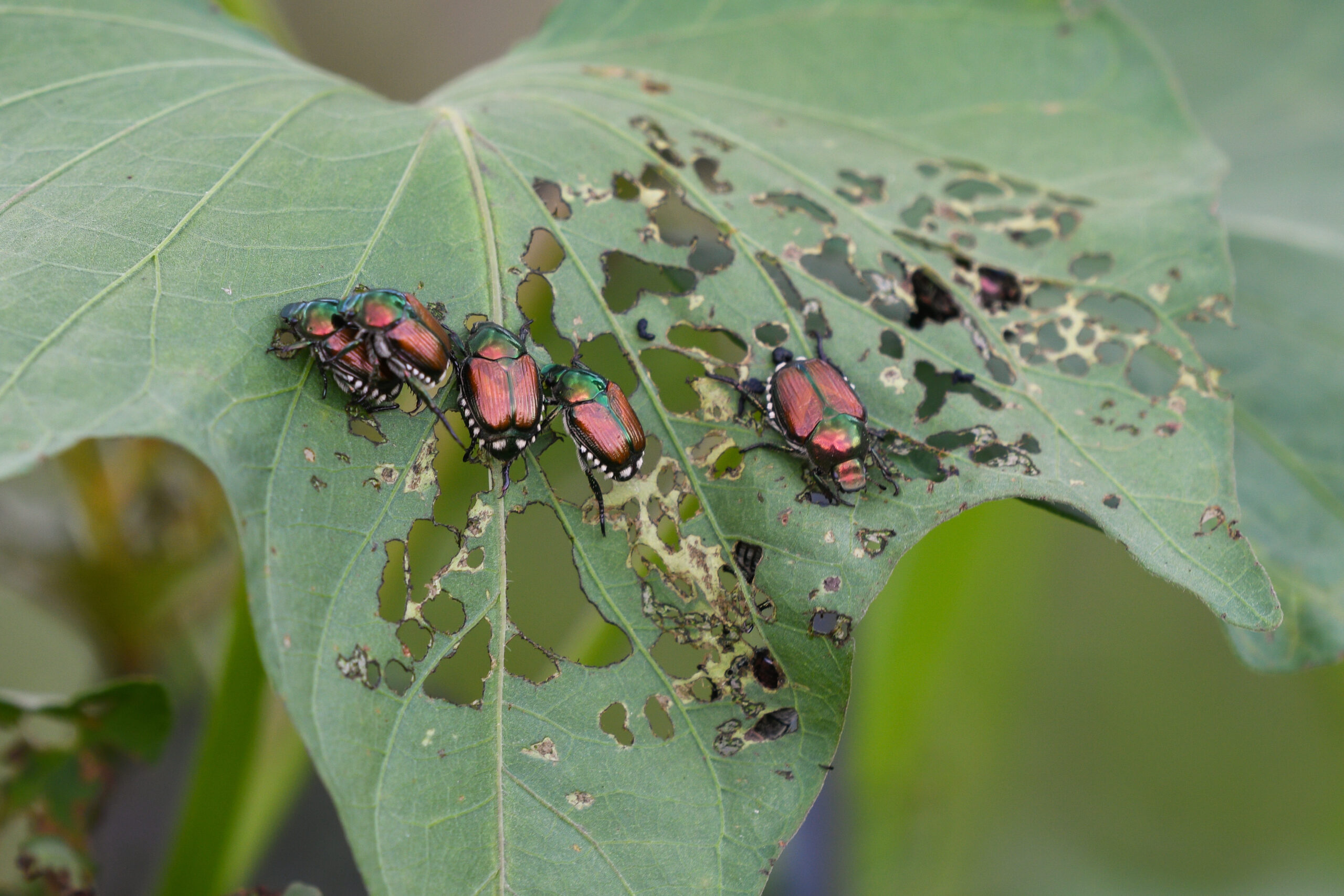
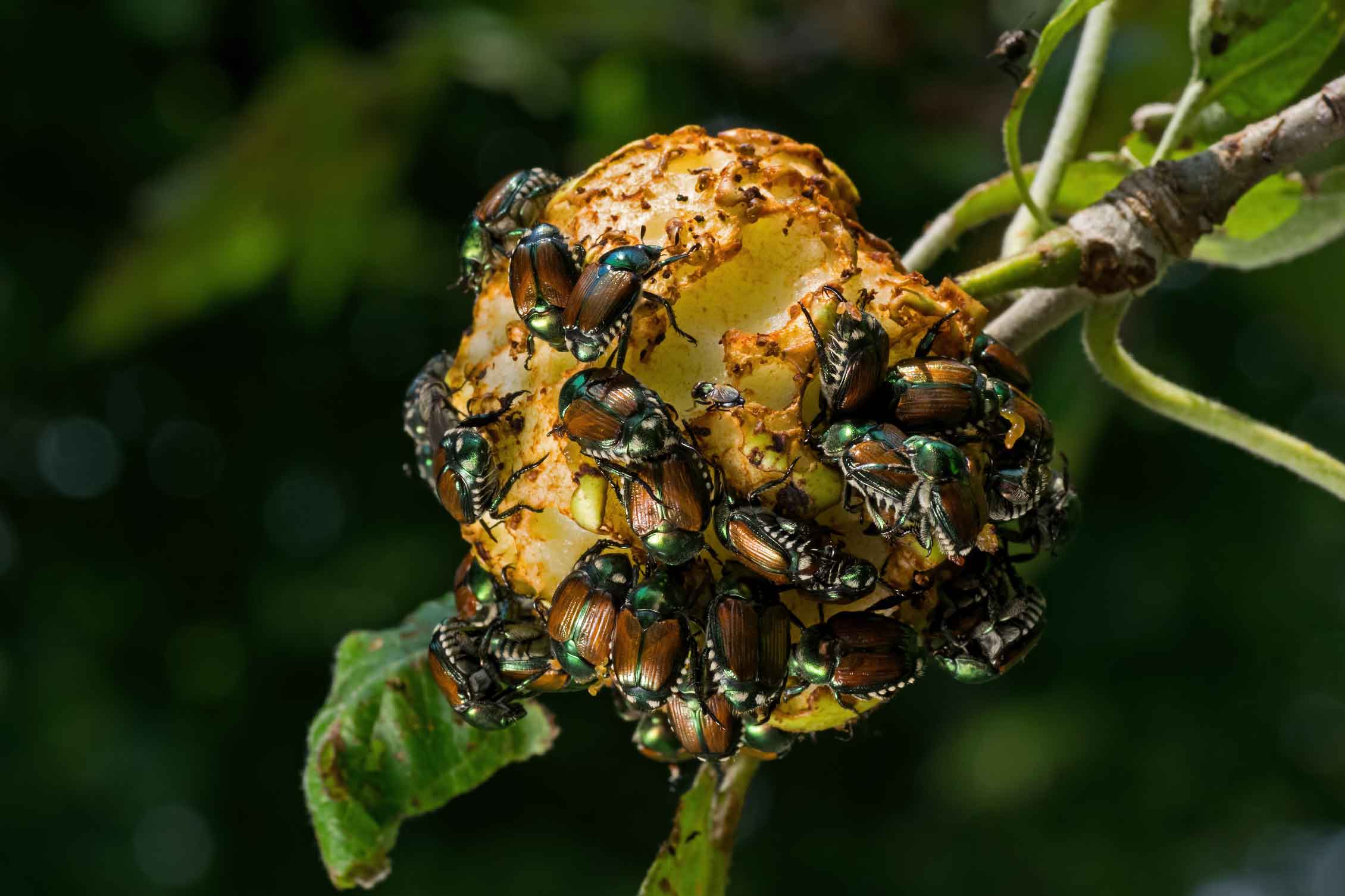
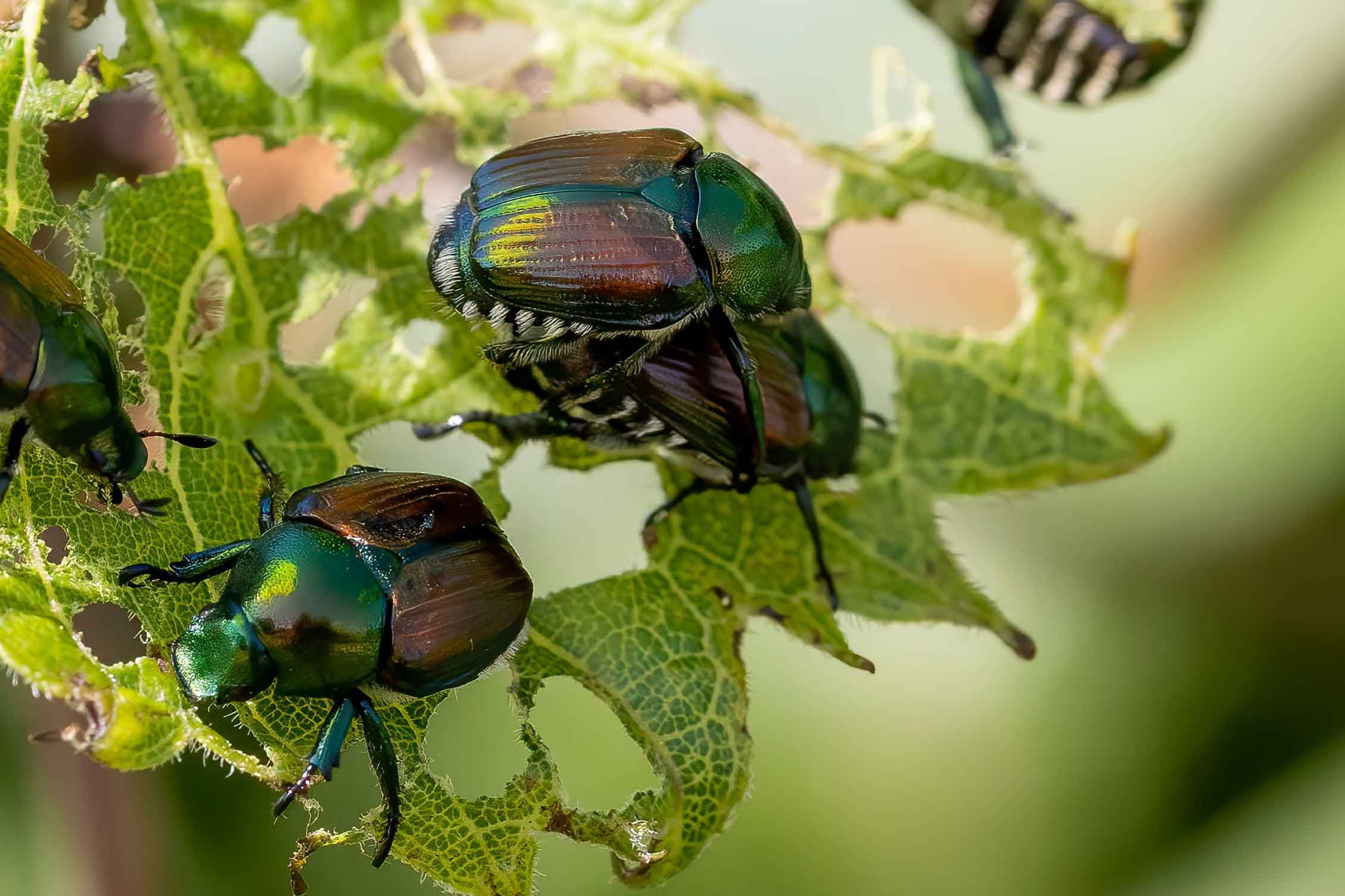
Adults of P. japonica are bright metallic green with bronze-copper colored elytra that do not fully cover the body; they are oval-shaped and vary in size from 8 to 11 mm in length and 5 to 7 mm in width. The presence of white hair tufts (5 on the terminal sides of the abdomen and 2 larger ones on the terminal part of the elytra) makes it easy to distinguish P. japonica from other beetles often found in the same environments, such as Anomala vitis and Cetonia aurata, or Phyllopertha horticola (garden chafer). Popillia japonica is a gregarious insect and can be found in large groups engaging in trophic or reproductive activities. Popillia japonica has three larval instars with the characteristic C-shape. In our areas, P. japonica has only one generation per year. It overwinters as a third-instar larva, burrowing 10-20 cm into the soil to escape low temperatures; adults are active between June and September with a peak activity in mid-July. In summer, females lay eggs directly into the soil, either singly or in small groups; sometimes they dig a small tunnel in the first 10 cm of soil to deposit the eggs.
Symptoms and Damage
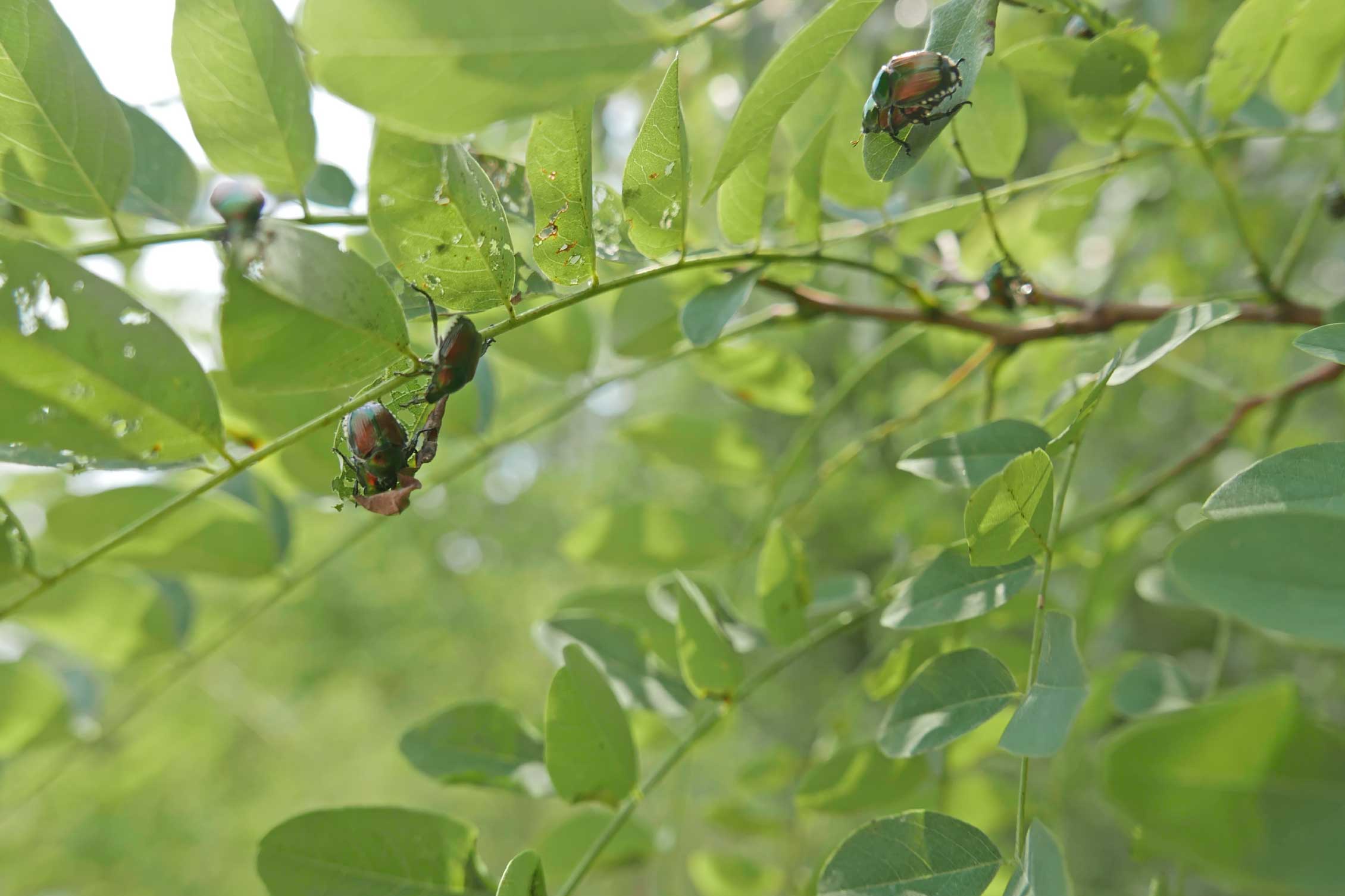
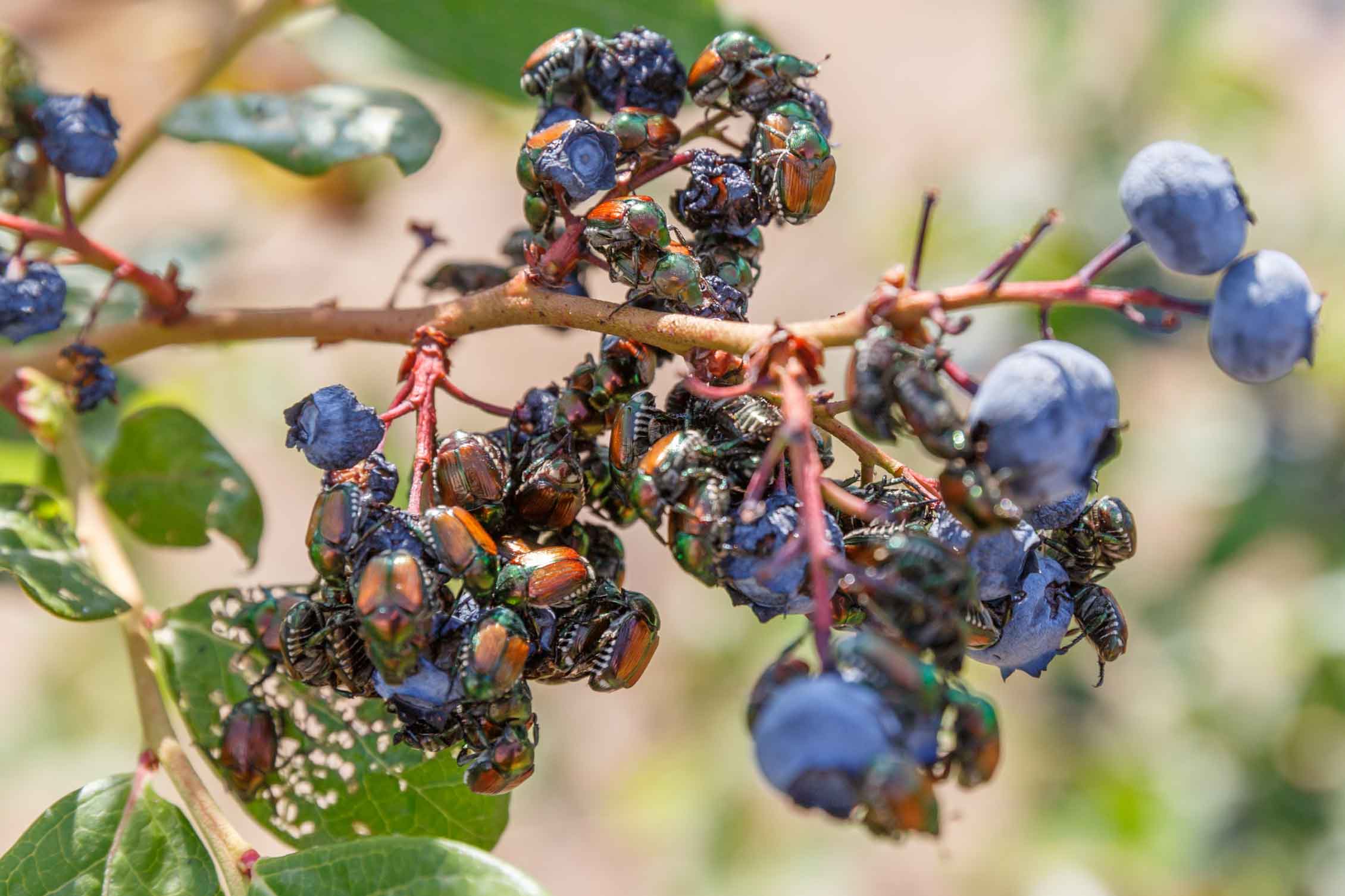
The signs/symptoms associated with P. japonica infestations are mostly due to the different life stages of the insect. In particular, damage to the leaves is undoubtedly the most evident symptom of P. japonica presence. Adults feed gregariously, generally starting from the top and gradually moving downwards. When the insect population density is high, the leaves are skeletonized with only the central vein remaining intact, while flowers and fruits are almost completely destroyed. The leaves thus affected turn brown and fall or remain attached to the plant. The larvae feed just below the soil surface and exclusively cause damage to the roots. The symptoms are non-specific; in the case of infested turf, these include thinning, yellowing, and wilting, with the appearance of noticeable patches of dead grass, generally in late summer or early autumn. In the case of severe infestations, the entire turf can die.
Hosts
P. japonica is an extremely polyphagous insect; it has been reported on over 300 plant species including fruit trees, forest essences, field crops, vegetable crops, ornamental plants, and wild plants where they feed on leaves, flowers, and fruits. Adults primarily attack the above-ground part of the plants, while the larvae usually feed on the root system, preferring grasses, and can cause significant damage to lawns, sports fields, and turf.
Spread
Internationally, P. japonica adults have been intercepted on agricultural products, packaging, on ships, and aircraft. Larvae can also be transported through the trade of ornamental plants. Locally, P. japonica has a good flight capacity. Although adults can fly up to 8 km away, most cover relatively short distances. The highest flight activity is reported on clear days with temperatures between 29°C and 35°C. P. japonica has currently spread from its areas of origin to a large part of the Central-Eastern United States, Southeast Canada, the Azores Islands (Portugal), and recently also to Italy and Switzerland. Nationally, its presence has been primarily recorded in Lombardy and Piedmont, where it represents a serious threat.
Ageon’s Commitment to the Fight Against Popillia japonica
Ageon, with over twenty years of experience in the commercialization of products and services for agriculture, offers Mulching Discs, a simple and quick solution to adopt among the preventive, containment, and control measures against Popillia japonica. The coconut fiber mulching discs are a useful element for covering the soil and are capable of effectively protecting shrubs and potted plants from frost and potential harmful crop pests, such as Popillia japonica.